Allow the leftover meat to cool completely to room temperature before storing it, but do not leave it out for more than two hours to avoid bacterial growth.
Once cool, wrap the slices or large portion tightly in plastic wrap, followed by a layer of aluminum foil, or place them in an airtight container.
This double layer helps prevent the meat from drying out and absorbing other odors from your refrigerator. Properly stored, cooked prime rib will last for 3 to 4 days in the refrigerator.
For longer-term storage, freezing is an excellent option.
To freeze, wrap individual slices or portions very tightly in plastic wrap and then place them in a heavy-duty freezer bag, squeezing out all the air before sealing. For the best quality, use frozen prime rib within 2 to 3 months.
While it remains safe to eat beyond that, the quality and texture will begin to degrade. When labeling, always note the date it was cooked to keep track of freshness and ensure you enjoy it at its best.
The key to enjoying leftover prime rib is proper reheating, as microwaving can quickly turn this luxurious cut into a tough, overcooked disappointment.
The best method is to reheat slices gently in a 250°F oven. Place the slices in a baking dish with a splash of beef broth or au jus to add moisture, cover tightly with foil, and warm for 15-20 minutes, or until just heated through.
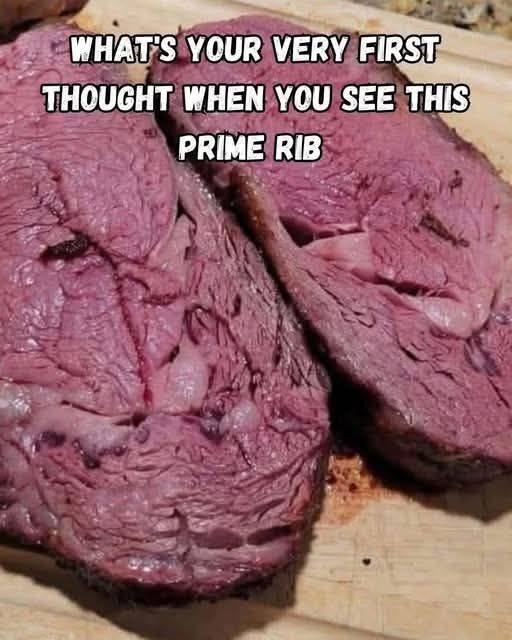
This low-and-slow approach revives the meat without continuing to cook it, preserving that beautiful medium-rare doneness from the center outwards.
In conclusion,
this high-heat, shut-off oven method is nothing short of revolutionary for home cooks who desire a spectacular, restaurant-quality prime rib without the stress of constant monitoring.
Its foolproof nature demystifies what many consider a challenging and expensive cut of meat. By rigorously following the steps—especially the non-negotiable rule of a room-temperature roast and never opening the oven door—you are guaranteed a result that is consistently juicy, perfectly pink from edge to edge, and incredibly tender.
This recipe provides a foundational technique that empowers you to experiment with confidence. Once you have mastered the basic method, you can confidently explore a world of different rubs, crusts, and accompaniments to make each prime rib dinner uniquely your own. It transforms a classic centerpiece meal from a high-stakes event into a reliably impressive and surprisingly simple culinary triumph that will earn you rave reviews every single time.
Read more on the next page