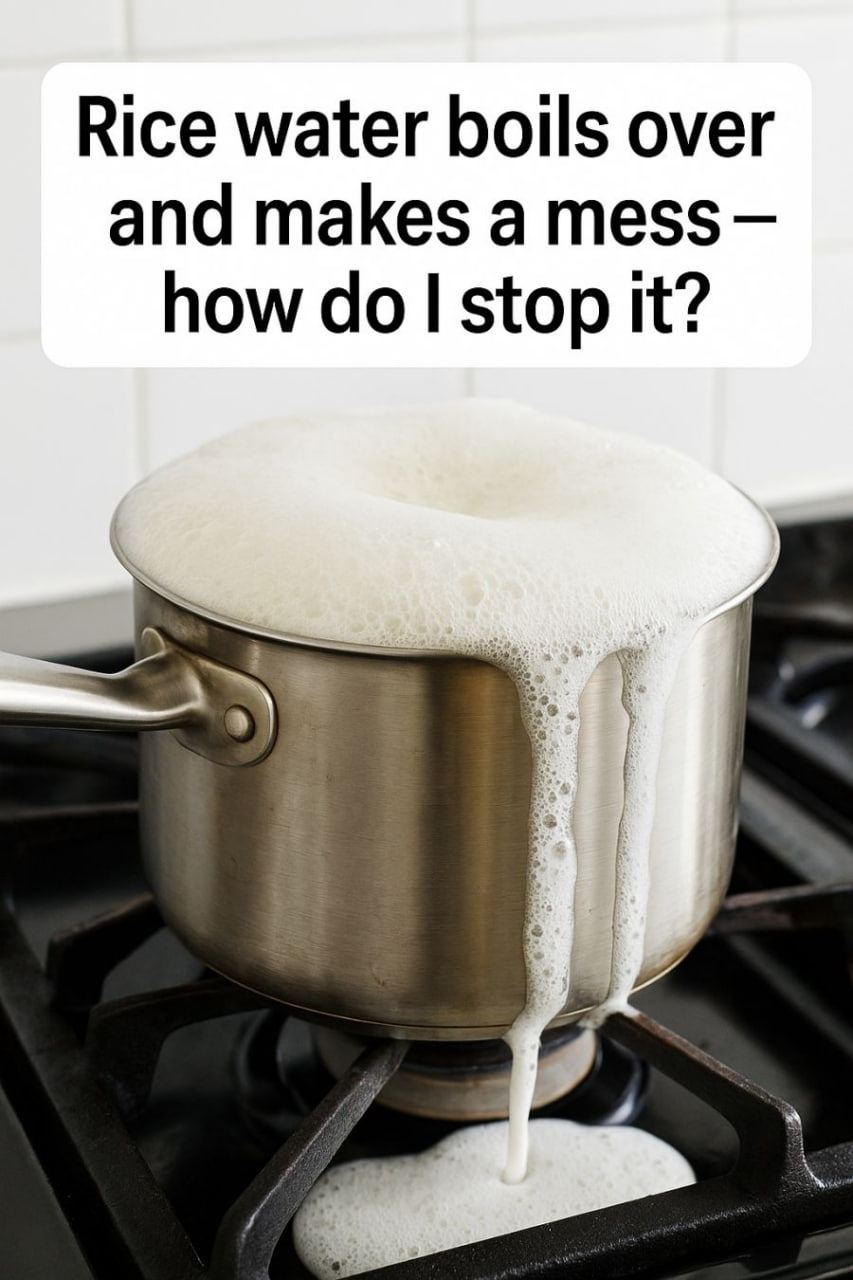
If you’ve ever cooked rice, chances are you’ve experienced this universal kitchen frustration: you turn your back for just a minute, and suddenly the pot is **boiling over like a miniature volcano**. Starchy water spills onto the stovetop, hisses as it hits the burner, and leaves behind a sticky mess that somehow hardens the moment it cools.
It’s annoying. It’s messy. And it makes a simple staple feel unnecessarily stressful.
The good news? Rice water boiling over isn’t a mystery — and it’s absolutely preventable. Once you understand *why* it happens and apply a few smart techniques, you can cook perfect rice without scrubbing your stove ever again.
Let’s break it down.
—
## **Why Rice Water Boils Over in the First Place**
To stop rice from boiling over, it helps to understand what’s going on inside the pot.
### **The Role of Starch**
Rice contains a high amount of starch. When rice cooks, starch granules are released into the water. As the temperature rises, these granules swell and thicken the liquid.
That starchy water forms **stable bubbles**—unlike plain water bubbles that pop quickly. These bubbles stack on top of each other, creating foam that climbs the sides of the pot.
### **The Boiling Point Problem**
Once the water reaches a rolling boil, steam pressure builds rapidly. Because the starchy foam doesn’t collapse easily, it traps steam underneath, forcing the liquid upward.
Eventually, gravity loses — and the rice water spills over.
Read more on the next page