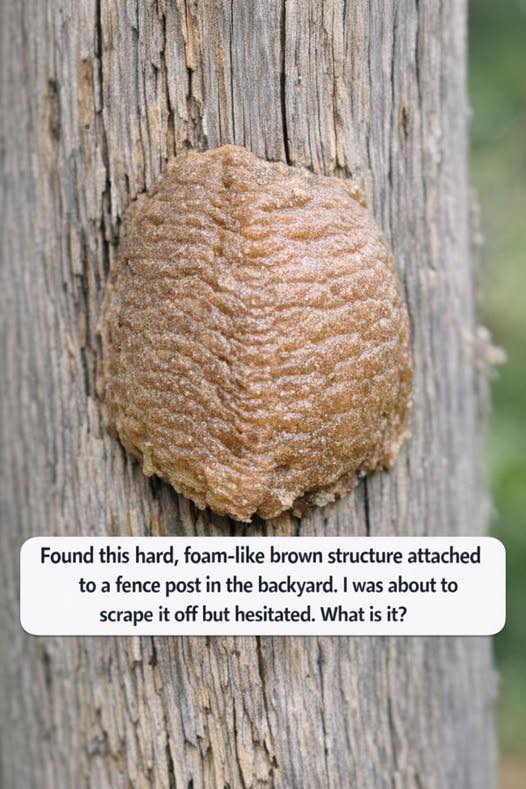
Coming across a strange structure in your backyard can spark both curiosity and concern. Maybe you’ve noticed a firm, brown, foam-like mass clinging to a fence post or tree branch. At first glance, it might seem suspicious—something harmful or invasive. But before you rush to remove it, it’s worth understanding what it actually is.
In a thriving backyard ecosystem, insects use surprisingly inventive strategies to survive and reproduce. That odd-looking structure is most likely a praying mantis egg case, known as an ootheca. Though small and easily overlooked, it plays a vital role in the life cycle of one of nature’s most fascinating predators. Here’s why this discovery matters—and why you may want to leave it exactly where it is.
1. The Curious “Foam” That Makes People Pause
A praying mantis egg case often surprises people because of its unusual appearance. Typically tan to light brown, it has a rough, foamy texture that can resemble a small wasp nest or even a fungal growth. About 1–2 inches long and roughly half an inch wide, it’s usually attached to twigs, stems, fence posts, or other sturdy surfaces.
Its odd texture and placement are no accident. The structure is carefully engineered to shield developing eggs from predators and harsh weather. What looks strange at first is actually a remarkable example of natural design.
2. The Hunter Behind the Brown Case
Praying mantises are well-known for their elongated bodies and folded forelegs, which are perfectly adapted for catching prey. As skilled predators, they feed on flies, crickets, caterpillars, and many other insects that might otherwise damage plants.
Belonging to the order Mantodea, mantises are found in many parts of the world and are especially appreciated in gardens. Recognizing their egg cases is the first step in understanding how each new generation begins—with hundreds of tiny mantises developing inside a single pro
3. What an Ootheca Looks and Feels Like
An ootheca is created in late summer or fall after mating. The female mantis secretes a frothy substance that quickly hardens into a durable casing around her eggs. The finished structure looks oblong and slightly ridged, with compartments inside that hold multiple eggs.
It feels firm yet faintly spongy, strong enough to endure winter conditions. This clever construction keeps the eggs insulated and secure until warmer weather signals it’s time to hatch.
4. Where You’ll Spot Them in the Yard
You’ll typically find mantis egg cases in places that provide both camouflage and protection—on shrub branches, within thick vegetation, or attached to solid surfaces like garden furniture and fence posts.
Their positioning isn’t random. When the young hatch, they need quick access to food sources such as small insects. By choosing sheltered but open areas, the female improves her offspring’s chances of survival.
tective shell.
Read more on the next page