3. The Science Behind Rinsing Pasta
The science of rinsing pasta revolves around the gelatinization of starch. As pasta cooks, the starch molecules absorb water and expand, creating a sticky surface. Rinsing with cold water stops the cooking process and removes the excess starch, resulting in a smoother texture.
Furthermore, rinsing pasta can prevent overcooking. The cold water halts the cooking process, ensuring that the pasta remains al dente, which is the desired texture for most pasta dishes.
4. Common Pasta Cooking Mistakes
One common mistake is not using enough water when boiling pasta. The general rule is to use about 4-6 quarts of water per pound of pasta. This ensures that the pasta has enough room to move and cook evenly.
Another mistake is not salting the water adequately. Salt enhances the flavor of the pasta, and it's recommended to use about 1-2 tablespoons of salt per gallon of water. Finally, overcooking pasta is a frequent error, leading to a mushy texture. It's important to follow the package instructions and taste the pasta a minute or two before the suggested cooking time ends.
5. How Rinsing Impacts Sauce Adherence
Rinsing pasta can impact how well the sauce adheres to it. The starch on the surface of the pasta acts as a glue, helping the sauce stick. By rinsing, you remove this starch, which can make it more challenging for the sauce to adhere.
However, this is not necessarily a negative outcome. For dishes that require a lighter coating of sauce, rinsing can be beneficial. It allows the pasta to shine as the main component, with the sauce serving as a complement rather than overpowering the dish.
6. Cultural Differences in Pasta Preparation
In Italy, the birthplace of pasta, rinsing is generally frowned upon. Italians believe that the starch helps the sauce cling to the pasta, creating a harmonious dish. In contrast, in some Asian cuisines, rinsing noodles is a common practice to achieve a specific texture.
These cultural differences highlight the diverse approaches to pasta preparation and the importance of understanding the context in which a dish is made. What works for one cuisine may not be suitable for another, and it's essential to respect these culinary traditions.
7. Popular Myths About Cooking Pasta
One popular myth is that adding oil to the boiling water will prevent pasta from sticking. In reality, oil can create a slippery surface, making it difficult for the sauce to adhere. Instead, stirring the pasta occasionally is a more effective way to prevent sticking.
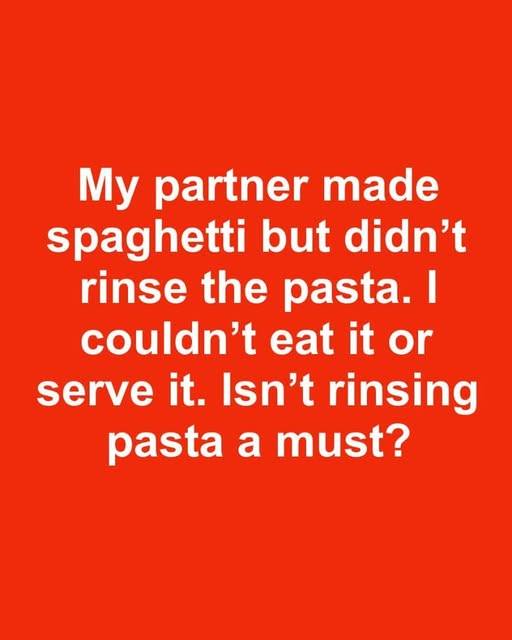
Another myth is that rinsing pasta is always necessary. While rinsing can be beneficial in certain situations, such as when making a cold pasta salad, it's not always required. Understanding when and why to rinse is key to achieving the desired outcome for your dish.
8. Expert Opinions on Rinsing Pasta
Many chefs and culinary experts have weighed in on the rinsing debate. Some argue that rinsing is essential for achieving the perfect texture, while others believe it should be avoided to preserve the pasta's natural flavor.
For instance, renowned chef Lidia Bastianich advises against rinsing pasta for hot dishes, as the starch helps the sauce adhere. However, she recommends rinsing for cold pasta salads to prevent clumping. Ultimately, the decision to rinse or not depends on the dish being prepared and personal preference.
Read more on the next page