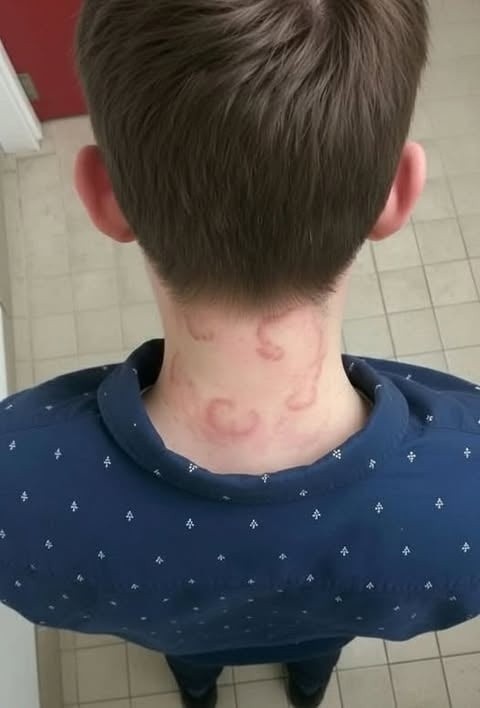
Body ringworm often starts as a small scaly patch that slowly expands outward, leaving clearer skin in the center and a more active border at the edge. Edges can look slightly raised or scaly, and the patch can itch or sting. On darker skin tones, the border may look brown or gray, while on lighter skin it may look pink or red. The face, trunk, and limbs can be involved, and the pattern can be less circular in some cases. Scalp ringworm in children may cause flaky patches, tenderness, or hair loss in irregular shapes. Beard area infection can cause swelling or crusting with hairs that break easily. Foot infections can crack the skin and lead to itching and soreness between the toes.
Nails can become thick and brittle if the infection reaches the nail unit. Doctors confirm uncertain cases by scraping a little scale from the edge and examining it under a microscope or sending it for culture. Groin involvement causes itchy, red scaling along the inner thighs and folds. On the scalp, tiny black dot hairs can mark broken follicles. A tender boggy swelling called a kerion needs prompt care to prevent scarring. Some Microsporum infections fluoresce green with a Wood lamp, though many do not. Facial involvement may lack rings and mimic eczema.
Read more on the next page