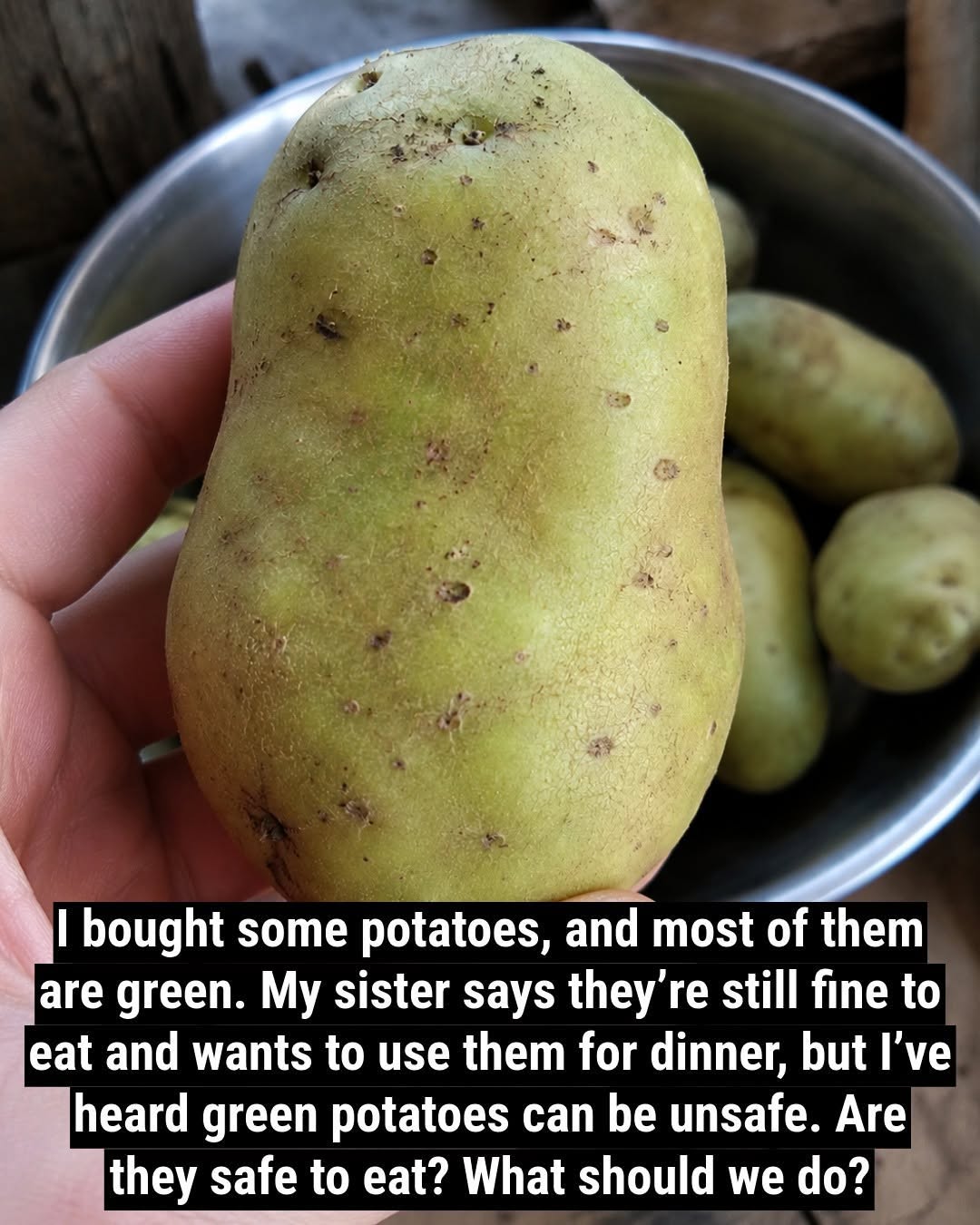
You pull a potato from the pantry, ready to make dinner, and notice something unsettling: a patch of green skin, or maybe a greenish tint just beneath the surface.
Your first thought: Is this still safe to eat?
You’re not alone. This is one of the most common kitchen questions—and the answer is more nuanced than a simple yes or no.
Let’s break down exactly why potatoes turn green, what it means for your health, and how to handle them safely—without wasting food or taking unnecessary risks.
🌿 Why Do Potatoes Turn Green?
The green color itself comes from chlorophyll—the same pigment that makes leaves, grass, and broccoli green.
How It Happens:
Step
What Occurs
Light exposure
Potatoes are tubers that grow underground. When exposed to light (sunlight, fluorescent bulbs, even bright kitchen lighting), they begin producing chlorophyll.
Chlorophyll production
This is a natural plant response—chlorophyll helps plants photosynthesize. The potato isn’t “rotting”; it’s trying to grow.
Green appearance
The skin turns green first, but the pigment can penetrate deeper into the flesh if exposure continues.
💡 Key insight: Chlorophyll itself is harmless. It’s tasteless, odorless, and non-toxic. The green color is just a visual signal—not the danger itself.
⚠️ The Real Concern: Solanine
While chlorophyll is safe, light exposure that triggers greening also stimulates the potato to produce solanine, a natural glycoalkaloid toxin.
What Is Solanine?
What Is Solanine?
A bitter-tasting compound produced by potatoes (and other nightshade plants like tomatoes and eggplants) as a defense against pests, fungi, and disease
Concentrated in the skin, eyes (sprouts), and green areas
Heat-stable: Not destroyed by cooking, boiling, or frying
Symptoms of Solanine Poisoning (Rare, but Possible):
Mild Exposure
Severe Exposure (Very Rare)
Bitter or metallic taste in mouth
Nausea, vomiting, diarrhea
Mild stomach discomfort
Headache, dizziness, fever
No symptoms at all (most common)
Neurological symptoms (confusion, weakness)
📊 Important context: Solanine poisoning is extremely rare in modern food systems. Most cases involve consuming very large quantities of heavily greened or sprouted potatoes—far more than a typical serving.
✅ Can You Still Eat Green Potatoes?
Short answer: It depends on the extent of greening—and your risk tolerance.
When It’s Likely Safe:
✅ Small green spots on the skin only
✅ Flesh is still white or cream-colored beneath the surface
✅ No sprouts, soft spots, or foul odor
✅ You peel generously, removing all green areas plus a margin of surrounding flesh
When to Discard:
❌ Extensive greening throughout the flesh
❌ Potato tastes bitter (a sign of high solanine)
❌ Sprouting heavily (eyes are also high in solanine)
❌ Soft, mushy, or moldy texture (indicates spoilage beyond solanine concerns)
❌ Serving vulnerable individuals: young children, elderly, pregnant people, or immunocompromised individuals
🎯 Practical rule: When in doubt, throw it out. Potatoes are inexpensive; your health isn’t.
🔪 How to Safely Handle a Slightly Green Potato
If you find a potato with minor greening and want to salvage it:
Step-by-Step Safety Protocol:
Wash thoroughly: Scrub under running water to remove surface dirt and residual solanine.
Peel deeply: Remove not just the green skin, but at least ¼ inch of flesh beneath it. Solanine concentrates just under the surface.
Cut away eyes and sprouts: Use a paring knife or vegetable peeler to remove all buds.
Taste a small raw piece: If it tastes bitter or peppery, discard the whole potato.
Cook as usual: Remember, cooking won’t eliminate solanine—but proper prep reduces risk significantly.
✂️ Pro tip: When peeling, err on the side of caution. It’s better to lose a little extra potato than to risk discomfort.
🗄️ How to Prevent Potatoes from Turning Green
Read more on the next page